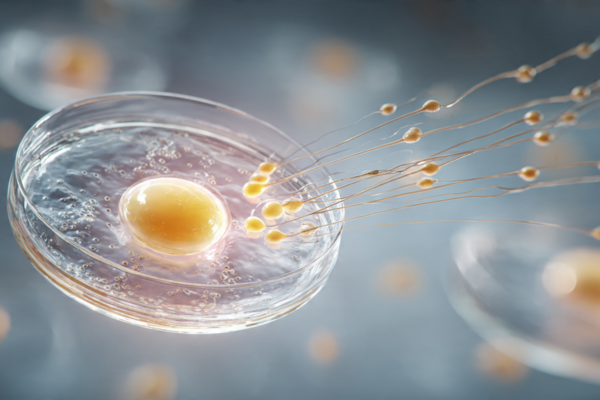
ICSI vs Conventional IVF is a common question for many couples trying to conceive: which method gives the best chance of fertilization? Recent large trials show that cumulative live birth rates can be very similar, around 43 to 47 percent across cycles in some groups.
At The Life Fertility Clinic, we know this decision can feel overwhelming, so we have brought together current research and our clinical perspective to help you understand how each method affects fertilization and when one may be recommended over the other.
Key Takeaways
| Question | Short Answer |
|---|---|
| What is the main difference between ICSI and conventional IVF? | In conventional IVF, thousands of sperm are placed around each egg,, and fertilization happens on its own. In ICSI, an embryologist injects a single sperm directly into the egg. |
| Does ICSI always improve fertilization rates? | Research suggests ICSI can reduce the risk of total fertilization failure in some groups, but in many non-severe male factor cases, overall fertilization and pregnancy outcomes can be similar to conventional IVF. |
| Is ICSI better for male factor infertility? | ICSI is often used when semen quality is low or sperm need to be surgically retrieved, and our ICSI service is designed for these situations. |
| Which method leads to more births overall? | Large randomized trials report that live birth and cumulative live birth rates can be very similar between ICSI and IVF in many patients, which means the “best” option often depends on your specific diagnosis and individual IVF plan. |
| Can ICSI improve embryo quality or implantation? | Some recent studies suggest that even when ICSI improves per-egg fertilization, it does not necessarily improve implantation or live birth, which is why we assess benefit carefully and may combine it with tools like PGT when appropriate. |
| How do we decide between ICSI and IVF? | We evaluate semen parameters, previous cycle history, age, and underlying causes of infertility as outlined in our overview of infertility and IVF, then recommend the method that best matches your situation. |
Understanding Fertilization: What Happens In IVF And ICSI Labs
Fertilization is the step where the egg and sperm join to form an embryo, and it sits at the heart of both ICSI and conventional IVF.
In our laboratory, the choice of technique shapes how closely we assist this natural process and how we manage risks like fertilization failure.
How Conventional IVF Achieves Fertilization
In conventional IVF, we place a carefully prepared concentration of sperm around each mature egg in a culture dish.
The sperm must still attach to the egg, penetrate the outer layers, and fuse with it without additional micromanipulation.
How ICSI Changes The Fertilization Step
With ICSI, our embryologist selects a single sperm that appears structurally normal and injects it directly into the center of the egg using a fine needle.
This bypasses several natural barriers for the sperm and can help when sperm motility or shape is compromised.
Why Fertilization Method Matters To Patients
The method we use may influence how many eggs fertilize, how many embryos are available, and how we plan future cycles.
However, research suggests that higher fertilization per egg does not always mean higher chances of taking home a baby, which is why we look at the full picture, not just a single laboratory number.
What Is Conventional IVF And When Is It Used?
Conventional IVF has been used for decades and remains the standard approach for many patients worldwide.
It typically suits couples where sperm parameters are reasonable and there is no strong history suggesting fertilization failure.
Overview Of The Conventional IVF Process
IVF involves stimulating the ovaries, retrieving mature eggs, exposing them to healthy sperm, then monitoring fertilization and embryo development.
Our team explains this step by step during your IVF procedures and treatment consultation so you know what to expect in your own cycle.
Who May Benefit From Conventional IVF Alone
Conventional IVF is often considered for unexplained infertility, mild tubal issues, endometriosis, or mild male factor with adequate sperm count and movement.
Some large randomized trials suggest that in non-severe male factor cases, conventional IVF can achieve fertilization and birth rates similar to ICSI.
Balancing Simplicity And Support
Because conventional IVF leaves more of the fertilization work to the sperm and egg, it is generally less invasive at the laboratory level.
At the same time, we still monitor your response closely and use our full embryology expertise to care for your eggs and embryos.
What Is ICSI, And Why Was It Developed?
ICSI was originally developed to help couples facing severe male factor infertility, such as very low sperm counts or poor sperm movement.
It is now commonly offered more widely, which raises the question of when it really improves fertilization compared with conventional IVF.
How ICSI Works In Practical Terms
In ICSI, we immobilize a sperm, draw it into a micro-needle, and pass that needle through the shell of the egg into its center.
This requires specialized equipment and highly trained embryologists, and is discussed in detail in our guide to Intracytoplasmic Sperm Injection.
Original Indications For ICSI
ICSI was designed for cases with poor semen parameters, previous fertilization failure, or sperm retrieved directly from the testis or epididymis.
In these situations, placing sperm around the egg may not be reliable enough, so direct injection can provide a practical way to attempt fertilization.
Expanding Use Beyond Severe Male Factor
Over time, some clinics started to use ICSI more routinely, even when sperm counts were near normal, mainly to reduce the chance of no fertilization.
Current research is now testing whether this wider use improves overall outcomes, or whether conventional IVF remains sufficient for many couples.

A clear side-by-side comparison of ICSI and conventional IVF. It highlights which method tends to improve fertilization and when each approach may be recommended.
Research On Fertilization Rates: ICSI vs Conventional IVF
When we look closely at recent studies, the picture around fertilization is more nuanced than simply “ICSI is better” or “IVF is better.”
Different trials, patient groups, and outcome measures can show slightly different patterns.
Per-Egg Fertilization In Some Studies
A recent meta-analysis reported that fertilization rate per injected or inseminated egg was higher with ICSI in some non-male factor infertility groups, with a relative risk of around 1.14 in favor of ICSI.
This can help explain why many clinics consider ICSI when they want to reduce the chance of eggs not fertilizing at all.
Total Fertilization Failure And ICSI
The same meta-analysis noted that ICSI was associated with a lower relative risk of total fertilization failure compared with IVF in certain non-male-factor cases.
For patients who have had a previous cycle where no eggs were fertilized, this reduction in risk can feel very meaningful.
Mixed Findings On Embryo Numbers
On the other hand, in at least one large multicenter trial, the ICSI group actually had fewer embryos available on day 3 and lower implantation rates compared with the conventional IVF group.
These findings remind us that more fertilized eggs do not always mean better embryo development or higher implantation.
Did You Know?
Fertilization rate per oocyte inseminated or injected has been reported as higher with ICSI, with a relative risk around 1.14 in non-male-factor infertility, yet this improvement does not consistently translate into higher live birth rates.
From Fertilization To Baby: Why Live Birth Rates Matter More
While it is natural to focus on fertilization percentages, what matters most to our patients is the chance of having a baby.
Large randomized trials have been especially valuable for comparing ICSI and conventional IVF on this more meaningful outcome.
Live Birth After First Embryo Transfer
In one multicenter trial from China involving non-severe male factor infertility, live birth after the first embryo transfer was reported as 33.8 percent for ICSI and 36.6 percent for conventional IVF.
The adjusted analysis did not show a statistically significant advantage for ICSI on this endpoint.
Cumulative Live Birth Over Multiple Transfers
A large Danish randomized study followed patients through fresh and frozen transfers and reported cumulative live birth rates around the mid-40 percent range for both IVF and ICSI.
Again, there was no clear overall advantage of ICSI in that population, which suggests that for many couples, conventional IVF remains appropriate.
Implantation And Embryo Quality
Some research notes that ICSI does not necessarily improve implantation rate and that in certain trials, implantation was slightly lower in the ICSI arm.
That is why we do not rely on ICSI as a universal “upgrade” but instead integrate it into a wider treatment plan that considers embryo development, transfer strategy, and supportive care.
When ICSI Clearly Improves Fertilization Chances
There are situations where ICSI is widely regarded as the more suitable option to support fertilization.
In these cases, the goal is not simply to raise a percentage, but to give sperm and egg a realistic chance to meet when conventional methods may not work.
Severe Male Factor Infertility
When sperm counts are very low, motion is poor, or morphology is significantly abnormal, conventional IVF might result in no fertilized eggs.
ICSI can help by allowing our embryologist to manually choose and inject single sperm that look structurally acceptable.
Sperm Retrieval From Testis Or Epididymis
If sperm are obtained surgically rather than from ejaculation, they are typically fewer in number and less mature in function.
ICSI is usually required in these cases because conventional IVF needs far larger numbers of motile sperm to work reliably.
Previous Total Or Near-Total Fertilization Failure
If a prior cycle using conventional IVF led to very few or no fertilized eggs, we often discuss ICSI for a subsequent attempt.
This is where the lower reported risk of total fertilization failure with ICSI may be particularly important for patients who have already had a difficult experience.
When Conventional IVF May Be Enough For Good Fertilization
For many couples, particularly where semen parameters are not severely impaired, conventional IVF can provide robust fertilization outcomes.
Some recent studies even report slightly better per-egg fertilization with IVF in non-severe male factor groups in specific trial designs.
Non-Severe Male Factor And Unexplained Infertility
In couples with unexplained infertility or only mild disturbances in sperm count or motility, randomized evidence suggests no significant advantage of routine ICSI for live birth outcomes.
In such settings, conventional IVF may produce similar fertilization and embryo numbers without the extra lab intervention that ICSI requires.
Balancing Risks, Complexity, And Cost
ICSI is more technically involved and adds complexity to the lab stage of treatment.
When research does not show a clear benefit for a particular patient group, it can be reasonable to consider whether conventional IVF offers a simpler yet still effective option.
Personalized Choices Rather Than One-Size-Fits-All
At our clinic, we rarely treat “average” patients and instead focus on the individual couple in front of us.
This means that two couples with similar semen numbers might still receive different recommendations, depending on age, egg reserve, prior treatment history, and their preferences.
Did You Know?
A large Danish randomized trial reported cumulative live birth rates of about 47.3% with conventional IVF and 43.2% with ICSI, with no statistically significant difference between the two approaches.
Beyond The Lab: Other Factors That Influence Fertilization Success
Fertilization does not happen in isolation, and many lifestyle and medical factors influence egg and sperm quality before they ever reach our lab.
We focus on these broader aspects alongside the technical choice between ICSI and IVF.
Optimizing Pre-IVF Health
Nutrition, weight management, and general health can affect both sperm and egg quality.
Our guides on lifestyle, such as maintaining a healthy weight and choosing supportive foods, are aimed at helping you create the best possible conditions before a cycle.
Understanding Conditions That Affect Fertilization
Conditions like endometriosis, polycystic ovary syndrome, and secondary infertility can impact egg quality, hormone levels, and sperm interaction with the egg.
We explore these in detail in our educational content so that you can understand how underlying diagnoses might shape your fertilization plan.
Emotional Support And Realistic Expectations
IVF and ICSI can be emotionally demanding, particularly if you have experienced previous failed cycles or fertilization problems.
We work with you to set realistic expectations, explain what each result means, and plan next steps together, rather than focusing only on numbers.
How We Help You Decide Between ICSI And Conventional IVF
Choosing between ICSI and conventional IVF is not only about statistics, but about your specific story, values, and medical details.
We believe in shared decision-making, where we explain the evidence clearly and listen to your preferences.
Comprehensive Fertility Evaluation
Before recommending ICSI or IVF, we assess semen analysis, ovarian reserve, hormone levels, ultrasound findings, and your previous fertility history.
This is part of our broader approach to helping you work with the right IVF specialists who can interpret this information in context.
Discussing Risks And Uncertainties Honestly
No fertility treatment can guarantee fertilization or pregnancy, and even strong research data has limitations.
We explain where evidence is robust, where it is still evolving, and what that might mean for your individual plan.
Tailoring The Plan Over Time
If your first cycle involves conventional IVF and fertilization is lower than expected, we may suggest ICSI in a subsequent attempt.
Similarly, if ICSI does not give the expected results, we review all factors together and discuss alternative strategies or adjunctive treatments.
Conclusion
ICSI and conventional IVF are both powerful tools that can support fertilization in different ways, and neither is “better” in every situation.
Current research suggests that ICSI can reduce the risk of total fertilization failure and may improve per-egg fertilization in some groups, while overall live birth rates often remain similar to conventional IVF, especially in non-severe male factor and unexplained infertility.
At The Life Fertility Clinic, our priority is to match the right method to your diagnosis, history, and goals, not to promote one technique for everyone.
If you are weighing ICSI versus conventional IVF, we encourage you to book a consultation so we can review your results together, explain the latest evidence in clear terms, and design a treatment plan that feels both medically sound and personally acceptable for you and your family.