

Having a baby after 40 may come with more questions than you expected. Perhaps you’ve been trying to conceive for a while, or you’re only now considering motherhood. Either way, concerns about age, egg quality and pregnancy chances are understandable.
The good news is that IVF treatment for women over 40 can still offer a pathway to pregnancy. While fertility naturally declines with age, advances in reproductive medicine have made it possible for many women to explore treatment options suited to their individual circumstances.
At The Life Fertility Centre, we understand that fertility journeys are rarely straightforward. That’s why understanding your reproductive health, getting the right medical advice and exploring suitable treatment options are important first steps.
So, what does IVF after 40 involve, and what should you consider before starting?
Can Women Over 40 Get Pregnant Through IVF?
Yes, women over 40 can get pregnant through IVF. However, the likelihood of success depends on several factors, including egg quality, ovarian reserve, sperm health, and the condition of the uterus.
One of the biggest challenges is the natural decline in egg quality as women age. As a result, fewer eggs may develop into embryos capable of producing a healthy pregnancy.
This doesn’t mean pregnancy is impossible. It simply means treatment needs to be approached with realistic expectations and a clear understanding of your fertility health.
Depending on your assessment, a fertility specialist may recommend:
- IVF using your own eggs.
- IVF using donor eggs.
- Intracytoplasmic sperm injection (ICSI), where clinically appropriate.
- Preimplantation genetic testing (PGT), when indicated.
- Frozen embryo transfer.
The most suitable option will depend on your individual circumstances, not your age alone.
Your Journey to Parenthood Starts Here
Your fertility journey deserves personalised care, honest guidance and a treatment plan built around you.
Visit Our Centre
34, Oyinlola Street, by Adeolu Bus Stop, Lagos-Abeokuta Expressway, Dopemu, Agege, Lagos, Nigeria.
Call Us
Opening Hours
Monday – Friday: 8 AM – 5 PM
Saturday: 10 AM – 2 PM
Why Does Female Fertility Decline After 40?
Age plays an important role in female fertility, mainly because women are born with a limited supply of eggs. As the years pass, both the number and quality of these eggs decline.
There are three important changes to understand.
1. Reduced ovarian reserve
Ovarian reserve refers to the remaining supply of eggs in the ovaries. By the early 40s, many women have fewer eggs available than they did in their 20s or 30s. This can affect how many eggs are collected during IVF treatment.
2. Changes in egg quality
Egg quality also declines with age. Older eggs are more likely to have chromosomal abnormalities, which can affect fertilisation, embryo development and implantation.
3. Increased risk of miscarriage
Chromosomal abnormalities can prevent an embryo from developing normally, increasing the likelihood of miscarriage. This is one reason pregnancy becomes more challenging as maternal age increases.
Understanding these changes helps fertility specialists recommend treatment based on your reproductive health rather than making assumptions about what is or isn’t possible.
What Are the IVF Success Rates for Women Over 40?
IVF success rates generally decrease as women get older, particularly when using their own eggs. For example, a woman undergoing IVF at 40 may have a different likelihood of success from someone undergoing treatment at 43 or 45.
The reason is largely related to egg quality and the number of embryos that develop successfully. According to the UK Human Fertilisation and Embryology Authority (HFEA), women aged 43–44 using their own eggs had an average live birth rate of approximately 8% per embryo transferred in 2024.
However, these figures are population averages, not predictions of an individual’s outcome.
Your chances may be influenced by:
- Your age when the eggs are collected.
- Ovarian reserve and response to stimulation.
- Egg and embryo quality.
- Sperm quality.
- Uterine health.
- Previous fertility treatment outcomes.
A fertility assessment at The Life Fertility Centre can help you understand the factors affecting your chances and the treatment options worth considering.
What Fertility Tests Should You Have Before IVF?
Before starting IVF, your fertility specialist needs a clearer picture of your reproductive health. This is particularly important after 40, when time can be an important consideration.
Common fertility investigations include:
Anti-Müllerian Hormone (AMH) Test: This blood test helps estimate ovarian reserve and predict how your ovaries may respond to stimulation medication. It does not directly measure egg quality.
Follicle-Stimulating Hormone (FSH) Test: FSH helps assess ovarian function and is often interpreted alongside other hormone results.
Antral Follicle Count: An ultrasound examination used to count small follicles in the ovaries.
Pelvic Ultrasound: This helps assess the uterus and ovaries and identify conditions such as fibroids or ovarian cysts.
Semen Analysis: Male fertility is equally important. This investigation examines sperm concentration, movement and shape.
Depending on your history, additional hormonal, genetic or imaging investigations may be recommended.
The Life Fertility Centre provides fertility evaluation for both male and female partners, helping identify possible causes of infertility and guide treatment decisions.
What Are the Best IVF Treatment Options After 40?
There isn’t one treatment that works best for every woman. Your fertility specialist will consider your test results, medical history and reproductive goals before recommending an approach.
1. IVF Using Your Own Eggs
This option involves stimulating your ovaries to produce eggs, collecting them and fertilising them with sperm in a laboratory. It may be suitable for women over 40 who have an ovarian response that supports treatment.
The main advantage is that the resulting child can be genetically related to the woman. However, fewer eggs may be collected, and age-related changes in egg quality can affect the chances of success.
2. IVF With Donor Eggs
For some women, using donor eggs may offer a more favourable chance of pregnancy. This option involves fertilising eggs from an eligible donor with sperm before transferring the resulting embryo into the recipient’s uterus.
The age of the egg donor is an important factor because younger eggs generally have a lower risk of age-related chromosomal abnormalities. Donor egg IVF may be considered when ovarian reserve is significantly reduced, previous IVF attempts have been unsuccessful, or egg quality presents a major challenge.
The decision should always involve appropriate medical advice, screening and informed consent.
3. IVF With ICSI
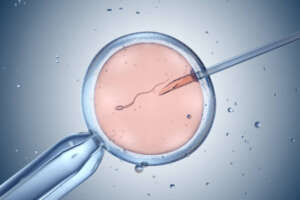
Intracytoplasmic sperm injection (ICSI) is a laboratory technique in which a single sperm is injected directly into an egg. It is commonly considered when there are male-factor fertility problems or previous fertilisation difficulties.
The Life Fertility Centre offers ICSI as part of its assisted reproductive services. It’s important to note that ICSI addresses certain fertilisation challenges but does not reverse age-related changes in egg quality.
4. IVF With Preimplantation Genetic Testing
Preimplantation genetic testing (PGT) involves examining cells from embryos for specific genetic or chromosomal conditions. For some women over 40, PGT may help inform embryo selection. However, it cannot improve egg quality, create chromosomally normal embryos or guarantee pregnancy.
Your fertility specialist can explain whether testing is appropriate for your circumstances.
How Does the IVF Process Work?
Although individual treatment plans differ, IVF generally follows these stages:
- Consultation and fertility assessment: Your medical history is reviewed, and necessary investigations are performed.
- Ovarian stimulation: Fertility medication encourages the ovaries to develop multiple follicles.
- Egg retrieval: Mature eggs are collected using ultrasound guidance.
- Fertilisation: Eggs are fertilised with sperm using conventional IVF or ICSI, where appropriate.
- Embryo development: Embryos are monitored in the laboratory as they develop.
- Embryo transfer: A suitable embryo is transferred into the uterus.
- Pregnancy testing: A blood test is performed at the recommended time to determine whether pregnancy has occurred.
The process can take several weeks, depending on your treatment protocol and whether additional procedures are needed. At every stage, your fertility team should explain what to expect and answer your questions.
Your Journey to Parenthood Starts Here
Your fertility journey deserves personalised care, honest guidance and a treatment plan built around you.
Visit Our Centre
34, Oyinlola Street, by Adeolu Bus Stop, Lagos-Abeokuta Expressway, Dopemu, Agege, Lagos, Nigeria.
Call Us
Opening Hours
Monday – Friday: 8 AM – 5 PM
Saturday: 10 AM – 2 PM
How Can You Improve Your Chances of IVF Success After 40?
While no lifestyle change can reverse egg ageing, looking after your general health can support your reproductive and pregnancy health.
A few practical steps include:
- Maintain a healthy weight through balanced nutrition and appropriate exercise.
- Avoid smoking and recreational drugs.
- Take folic acid before pregnancy, following medical advice.
- Get sufficient sleep and allow time for rest.
- Manage existing health conditions.
- Avoid unprescribed fertility supplements and medications.
- Attend fertility consultations promptly rather than delaying assessment.
Most importantly, don’t blame yourself if IVF doesn’t work the first time. Fertility treatment involves biological factors that are not always within your control.
Why Choose The Life Fertility Centre for IVF Treatment?
Choosing a fertility clinic is a personal decision. Beyond medical procedures, you want a team that listens, explains your options and understands the emotional side of trying to conceive.
The Life Fertility Centre is a specialised assisted conception and diagnostic centre in Lagos, Nigeria, committed to providing patient-centred, high-quality and cost-effective fertility care.
Its services include:
- IVF procedures and treatments.
- Intracytoplasmic sperm injection (ICSI).
- Intrauterine insemination (IUI).
- Preimplantation genetic testing (PGT).
- Oocyte donation.
- Sperm donation.
- Donor embryo adoption.
- Sperm and embryo cryopreservation.
- TESA, PESA and TESE procedures.
The centre also supports international fertility patients, including individuals who wish to coordinate parts of their treatment with their local fertility clinics abroad.
This approach recognises that every patient’s circumstances are different. Whether you’re exploring IVF with your own eggs or considering alternative treatment options, the first step is understanding what may work for you.
Frequently Asked Questions About IVF After 40
Is 40 too old for IVF?
No. Women aged 40 can still pursue IVF. However, egg quality and ovarian reserve generally decline with age, so an early fertility assessment is important.
When should I see a fertility specialist after 40?
As soon as you decide to pursue pregnancy or have concerns about your fertility. Women over 40 should not delay assessment because fertility can decline with time.
Does AMH determine whether I can get pregnant?
No. AMH helps estimate ovarian reserve but does not directly measure egg quality or determine whether natural conception or IVF will be successful.
Are donor eggs better for women over 40?
Donor eggs may provide higher success prospects when age-related changes have significantly affected a woman’s own eggs. The donor’s age and the recipient’s health both matter.
Is IVF successful at 45?
Pregnancy using your own eggs at 45 is uncommon, although individual circumstances vary. Donor egg IVF may offer an alternative worth discussing with a fertility specialist.
Can I do IVF at 42 with my own eggs?
Yes, it may be possible. Your ovarian reserve, egg quality, medical history and previous treatment outcomes will help determine whether IVF with your own eggs is appropriate.
Start Your Fertility Journey With The Life Fertility Centre
Turning 40 doesn’t mean you have to abandon your hopes of becoming a mother. It does mean that understanding your fertility and exploring your options sooner rather than later can make a difference.
Whether you’re considering IVF with your own eggs, donor egg treatment or another assisted reproductive option, The Life Fertility Centre can help you explore the possibilitie
Your Journey to Parenthood Starts Here
Your fertility journey deserves personalised care, honest guidance and a treatment plan built around you.
Visit Our Centre
34, Oyinlola Street, by Adeolu Bus Stop, Lagos-Abeokuta Expressway, Dopemu, Agege, Lagos, Nigeria.
Call Us
Opening Hours
Monday – Friday: 8 AM – 5 PM
Saturday: 10 AM – 2 PM
Medical disclaimer: This article is for educational purposes and does not replace individual medical advice. IVF suitability, treatment options and success rates vary between patients. Consult a qualified fertility specialist for an assessment.