
Introduction: Balancing Contraception and Fertility
For many, the transition from preventing pregnancy to actively pursuing it is a major life milestone. However, this shift often brings a wave of questions about how years of hormonal regulation might influence your body’s natural rhythm.
Understanding the interplay between contraception and fertility is essential for a stress-free transition. Many women worry that they have “turned off” their reproductive system for too long, but the biological reality is far more optimistic.
Your journey to conception depends less on how long you used birth control and more on how well you support your body during the recalibration phase. By mastering the relationship between contraception and fertility, you can move forward with confidence, knowing exactly what to expect as your natural cycle resumes.
Secret 1: The Truth About Long-Term Contraception and Fertility
One of the most persistent myths in reproductive health is that long-term use of the pill or other hormonal methods causes permanent damage. Let’s be clear: contraception and fertility are not enemies. Hormonal birth control works by temporarily suppressing ovulation, not by depleting your ovarian reserve.
Extensive clinical studies have shown that women who have used oral contraceptives for a decade or more conceive at nearly the same rates as those who never used them.
If you experience a delay in getting pregnant after birth control, it is often because the contraception was “masking” an underlying issue, such as PCOS or irregular cycles, that existed before you ever started the medication. Once the hormones leave your system, your baseline fertility returns to its natural state.
Secret 2: Return to Fertility – Timelines by Method
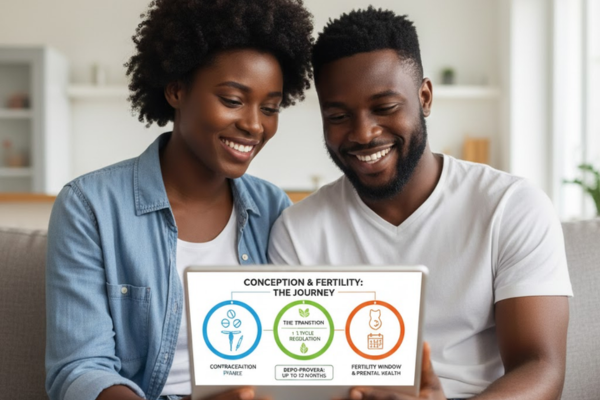
The timeline for your return to fertility depends heavily on the delivery method of your birth control. While the “washout” period is a common concern, most methods allow for a rapid recovery. For those using the oral contraceptive pill, the ring, or a Mirena IUD, fertility typically returns within one to three months.
In fact, many women experience post-pill ovulation within just weeks of their last dose. However, the Depo-Provera shot is a notable exception; because it is designed to stay in the muscle tissue, it can take anywhere from six to twelve months for regular ovulation to resume.
Understanding these method-specific nuances helps you plan your timeline accurately, ensuring that your expectations for contraception and fertility recovery align with biological reality.
Secret 3: Identifying Your Fertile Window with Precision
Once you stop using birth control, your primary goal is to identify your “fertile window.” This is where fertility awareness methods become invaluable. Relying solely on a calendar app is often insufficient, as your body may take a few cycles to regulate.
To master contraception and fertility tracking, monitor your Basal Body Temperature (BBT) and cervical mucus consistency. A slight rise in BBT and the appearance of “egg-white” mucus are clear indicators of post-pill ovulation.
Additionally, using Luteinizing Hormone (LH) strips can provide a definitive heads-up that ovulation is approaching. By focusing on these biological markers, you take the guesswork out of the process and maximize your chances of conceiving during those critical six days of the month.
Secret 4: The Role of Hormonal “Washout” Periods
While you can technically conceive the moment you stop birth control, some healthcare providers suggest a brief “washout” period. This isn’t because the hormones are toxic, but because your endometrial lining—the lining of the uterus—needs time to thicken.
Hormonal birth control often thins this lining to prevent implantation. Taking one or two cycles to allow your natural hormones to rebuild this lining can create a more “welcoming” environment for a fertilized egg. During this phase, you can focus on tracking your cycle without the pressure of immediate results.
Balancing contraception and fertility transition in this way often leads to a more predictable pregnancy dating process once you do conceive.
Secret 5: Nutritional Restoration for Conception
Hormonal contraceptives are highly effective, but they are known “nutrient robbers.” Specifically, they can deplete the body’s stores of B vitamins, Zinc, and Magnesium. To optimize the link between contraception and fertility, you should start a high-quality prenatal vitamin featuring at least 400mcg of folic acid (or folate) at least three months before you stop your birth control.
This proactive approach ensures that your “nutrient bank” is full, supporting early fetal neural tube development and overall hormonal health. Think of this as preparing the soil before planting the seed; the better the nutritional environment, the smoother your return to fertility will be.
Secret 6: Managing Post-Birth Control Syndrome
As your body recalibrates its contraception and fertility balance, you might encounter what some call “Post-Birth Control Syndrome.” This isn’t a medical diagnosis, but rather a collection of symptoms—like breakout skin, mood swings, or heavy periods—that occur as your natural hormones wake up.
For many, the pill was used to manage these exact symptoms years ago. To support a healthy hormonal balance, focus on a diet rich in fiber and cruciferous vegetables, which help the liver process the synthetic hormones, leaving your system. Most of these symptoms are temporary and signify that your body is successfully returning to its natural reproductive rhythm.
Secret 7: Weight, BMI, and Ovulation Success
Body composition plays a significant role in the transition from contraception to fertility. Fat cells produce estrogen, and having too much or too little can disrupt the delicate hormonal signals required for ovulation.
A Body Mass Index (BMI) that is significantly outside the “normal” range can lead to amenorrhea (lack of periods) or irregular cycles, making it harder to time intercourse. If you are struggling with getting pregnant after birth control, small, sustainable changes to your weight can often “jumpstart” your ovulation.
The goal isn’t perfection, but rather finding a metabolic equilibrium where your body feels safe and supported enough to sustain a pregnancy.
Secret 8: Partner Health – The Other Half of the Journey
When discussing contraception and fertility, the focus is almost always on the woman, but the male partner contributes 50% of the genetic material. Sperm quality is just as critical as egg quality. Men should avoid excessive heat (like hot tubs), limit alcohol, and consider supplements like Zinc and Selenium to boost motility and morphology.
It takes approximately 74 days for a new batch of sperm to mature, so your partner should start his own “pre-conception health” routine at the same time you stop your birth control. A successful journey to conception is a team effort.
Secret 9: Stress and the Hypothalamic-Pituitary Axis
The stress of “trying” can ironically make it harder to conceive. Your brain’s hypothalamus controls both your stress response and your reproductive hormones. High levels of cortisol can delay the signal for your ovaries to release an egg, leading to delayed post-pill ovulation.
When moving from contraception to fertility, it is helpful to maintain a lifestyle that includes moderate exercise and adequate sleep. Avoid the “obsession” phase of testing too early or over-analyzing every symptom. Keeping your nervous system regulated is one of the most underrated “secrets” to a successful and healthy conception journey.
Secret 10: When to Seek Professional Fertility Help
The final secret is knowing when to stop trying on your own and seek a professional. The standard guideline for contraception and fertility concerns is to see a specialist after one year of unprotected sex if you are under 35, or after six months if you are over 35.
However, if your periods do not return at all within three months of stopping birth control, you don’t need to wait for the year mark. Early intervention can identify issues like low ovarian reserve or fallopian tube blockages. Being proactive with a fertility doctor ensures that you aren’t wasting time if there is a biological hurdle that requires medical assistance.
Conclusion: Your Proactive Path to Conception
The journey from contraception to fertility is a deeply personal experience that requires patience, knowledge, and self-care. By understanding the timelines of your specific birth control method and supporting your body with proper nutrition and tracking, you set the stage for a healthy pregnancy.
Remember that most couples conceive within the first year of trying. Stay focused on your health, maintain open communication with your partner, and trust that your body knows how to find its way back to its natural fertile state.
Can being on the pill for 10+ years make me infertile?
No. Clinical data confirms that long-term use of hormonal birth control does not decrease your baseline fertility. Most women resume their natural post-pill ovulation within 1 to 3 months. Any delay is usually due to age or underlying health conditions rather than the pill itself.
Should I wait a few months after stopping the pill before trying to conceive?
While not strictly necessary, many experts suggest waiting for one natural period to accurately date the pregnancy and ensure the endometrial lining has fully reset. However, if you conceive immediately, there is no increased risk to the baby.
Does the morning-after pill affect my future fertility?
No. Emergency contraception works by delaying a single ovulation event to prevent a current pregnancy. It has no long-term impact on your ability to conceive in the future.
What is “Post-Pill Amenorrhea”?
This is the temporary absence of a period after stopping the pill. It usually resolves within 3 months as your body’s internal communication loop restarts. If your period doesn’t return after 90 days, consult a doctor to rule out PCOS or other hormonal imbalances.
How soon can I get pregnant after IUD removal?
You can technically get pregnant the very same month your IUD is removed. Unlike the injection, IUDs (both copper and hormonal) do not have a lingering systemic effect that prevents a quick return to fertility.