


Choosing the best IVF protocol in 2026 can feel overwhelming, especially when you are balancing emotions, time, and medical information all at once.
| Question couples often ask | Evidence‑informed answer |
|---|---|
| 1. What is the “best” IVF protocol overall in 2026? | There is no single best protocol for everyone. The most suitable option is usually a personalized plan based on age, ovarian reserve, sperm quality, medical history, and previous fertility treatment. Our clinicians use the structured approach outlined in our IVF procedures and treatments guide to design this plan. |
| 2. How much does age shape the choice of IVF protocol? | Age is a major factor in both protocol selection and expected outcomes. Our IVF success rate by age resource shows how cumulative live birth odds differ by age group, which helps set realistic goals and may guide decisions around stimulation intensity or donor eggs. |
| 3. When should we consider ICSI instead of standard IVF? | Intracytoplasmic Sperm Injection is often used when male factor fertility is a concern, or when there have been previous fertilization problems. You can learn how ICSI is integrated into IVF protocols in our ICSI overview. |
| 4. Is genetic testing (PGT) part of the best IVF protocols in 2026? | Preimplantation Genetic Testing can be added to an IVF protocol when there is a risk of specific inherited conditions or other medical indications. Our PGT guide explains when this option may be appropriate. |
| 5. What factors most affect IVF success with any protocol? | Key influences include age, embryo quality, uterine health, underlying conditions, and clinic expertise. We summarize seven essential elements in our factors affecting IVF success resource so you can ask focused questions during consultation. |
| 6. How do we weigh IVF’s pros and cons before choosing a protocol? | In 2026, IVF still offers powerful options alongside important emotional, financial, and ethical considerations. Our detailed overview on advantages and disadvantages of IVF can support an honest discussion with your care team. |
| 7. Where can we see a step‑by‑step outline of IVF treatments? | We have prepared an introductory guide to structured IVF strategies that walks through planning, lifestyle support, and protocol choices to help you build a clear multi‑cycle plan. |
1. Understanding IVF Protocols In 2026: What “Protocol” Really Means
When we talk about the “best IVF protocols” in 2026, we are talking about structured treatment plans that combine medications, timing, and procedures in a way that suits your body and your story.
A protocol is not one drug or one step, it is the entire roadmap for how eggs are stimulated, retrieved, fertilized, and how embryos are prepared for transfer or freezing.
Core elements every IVF protocol must address
Most evidence‑informed protocols in use today consider at least four pillars: egg stimulation, sperm preparation, laboratory fertilization method, and embryo transfer strategy.
Within each pillar, there can be gentle, moderate, or more intensive approaches, and our role is to align these choices with your health, age, and goals.
Protocols are personalized, not one‑size‑fits‑all
Large datasets show that factors like age and embryo quality influence live birth odds, but those numbers are population averages, not a prediction for one couple.
This is why we stress a “personalized protocol” approach in our IVF procedures and treatments services, rather than offering a single standard plan for everyone who walks through our doors.

2. Age‑Based IVF Planning: Why The Best Protocol Depends On Your Age
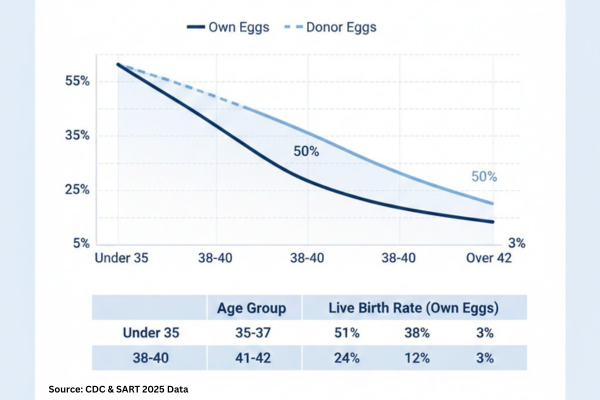
In 2026, age remains one of the strongest predictors of IVF outcomes, and it plays a major role in how we shape your protocol and set expectations with you.
Research compiled in our age‑related statistics resource shows that cumulative live birth odds after IVF tend to decline with advancing age, especially after the early forties.
How age may guide protocol intensity
For some younger patients with good ovarian reserve, we may consider gentler stimulation strategies that aim to balance egg numbers with comfort and safety.
As age increases or ovarian reserve decreases, your specialist may discuss stronger stimulation, more detailed monitoring, or early planning for multiple cycles.
Donor eggs and protocol decisions
For some couples, using donor eggs can change the age‑related outlook, because embryo quality will then reflect the age of the donor rather than the recipient.
Any conversation about donor eggs or donor embryos must be guided by your values, medical history, and local regulations, and we handle these discussions with care and transparency.
3. Key Factors That Shape The “Best” IVF Protocol For You
Age is important, but it is only one of several factors that determine which IVF protocol may be most appropriate and realistic.
We evaluate a cluster of clinical and lifestyle elements together, so that your plan reflects you as a whole person, not just a lab result.
Seven essential influences on protocol choice
- Ovarian reserve and egg quality indicators.
- Sperm count, movement, and shape.
- Uterine lining health and reproductive anatomy.
- Underlying conditions such as PCOS, endometriosis, or fibroids.
- Past treatment history, including IUI or previous IVF cycles.
- Body weight, metabolic health, and chronic illnesses.
- Clinic laboratory capabilities and experience with specific techniques.
Current data, including that summarized in our guide to factors affecting IVF success, supports the idea that clinic expertise and laboratory quality can materially influence outcomes, so choosing a center that uses clear, ethical protocols is part of your strategy.
Alongside medical assessments, we always encourage couples to consider emotional resilience and practical resources, since IVF protocols can require repeat visits, medications, and close monitoring over several weeks.

A concise four-step overview of common IVF protocols for couples. Helps with planning and clinician discussions.
4. Standard IVF Protocols: Baseline Approach Many Couples Start With
The standard IVF protocol is often used as a starting point for many couples, especially when ovarian reserve is acceptable and there is no strong reason to choose a very mild or very intensive route.
In this protocol, medications are used to stimulate the ovaries to grow multiple follicles, followed by an egg retrieval, fertilization in the laboratory, and embryo transfer or freezing.
When a standard protocol may be considered
Clinicians may suggest a standard approach if your hormone levels and ultrasound results indicate a balanced response is likely, without a high risk of over‑ or under‑response.
Standard protocols can give a reasonable number of eggs for fertilization in many age groups, though actual numbers and outcomes vary from person to person.
Pros and limitations of standard protocols
Potential benefits include predictable scheduling, widespread clinical familiarity, and the ability to adjust doses during monitoring if needed.
At the same time, standard protocols may not be ideal for every situation, such as very low ovarian reserve or very high risk of ovarian hyperstimulation, which is why tailoring remains central to our practice.
5. Mild And Gentle Stimulation Protocols: When “Less” Can Be More Appropriate
Mild stimulation protocols use lower doses of medication or shorter stimulation periods to encourage the ovaries to produce fewer eggs more gently.
In 2026, some couples prefer or require this approach, especially when there are concerns about side effects, cost, or specific health conditions.
Who might discuss mild stimulation in consultation
Your specialist might talk about a gentle protocol if you are younger, have a good ovarian reserve, or have previously shown a very strong response to medication.
Some patients with certain health risks or personal preferences may also explore this option, always weighing potential benefits and trade‑offs.
Balancing egg numbers and comfort
Mild protocols may aim for quality over quantity, although current evidence is still evolving and results can vary widely between individuals.
When we consider a mild route, we discuss with you how it could affect egg numbers, cycle numbers, and timelines, so you can decide whether it aligns with your priorities.

6. Intensive And “High‑Response” IVF Protocols: When We Need To Aim Higher
In some cases, your fertility specialist may recommend a more intensive stimulation approach to attempt to recruit a higher number of eggs in one cycle.
This is often discussed when ovarian reserve is limited, when time is a pressing factor, or when embryos are needed for genetic testing or future family building.
Clinical scenarios where stronger stimulation is considered
Examples can include certain low ovarian reserve patterns, older reproductive age, or the need to collect enough eggs for both current transfer and embryo freezing in one attempt.
Even with strong stimulation, there is no guarantee of a specific egg number or outcome, and careful monitoring is essential for safety.
Risks, benefits, and honest expectations
Potential advantages of intensive protocols include the chance to create more embryos from a single cycle, which can be helpful for multi‑cycle planning.
However, stronger stimulation can carry increased risks of side effects and discomfort, so we discuss these openly with you and adjust as needed during treatment.
7. Adding ICSI To Your IVF Protocol: When Is It Considered Best Practice?
Intracytoplasmic Sperm Injection, or ICSI, is not a separate treatment from IVF, it is a specialized fertilization method that can be integrated into your protocol when specific sperm‑related challenges are present.
In ICSI, an embryologist injects a single selected sperm into each mature egg using fine laboratory tools.
When specialists often recommend ICSI
Our clinicians may consider ICSI when sperm count, movement, or shape is significantly affected, or when previous IVF cycles showed poor or no fertilization in the lab.
ICSI may also be used with certain surgical sperm retrieval techniques like TESA or TESE, or in some cases when only a small number of eggs are available.
ICSI as part of a holistic protocol, not a stand‑alone decision
While ICSI can provide a technical advantage in specific scenarios, it does not replace the need for thoughtful stimulation planning, uterine assessment, and embryo transfer strategy.
We view ICSI as one tool in a complete IVF protocol, and we only suggest it when there is a clear medical or laboratory rationale based on your assessment.
8. Incorporating Preimplantation Genetic Testing (PGT) Into IVF Protocols
Preimplantation Genetic Testing, or PGT, can be added to an IVF protocol to analyze embryos for certain genetic characteristics before transfer.
In 2026, this is typically considered when there is a known inherited condition in the family, recurrent pregnancy loss with suspected genetic causes, or other specific indications that your clinician will discuss with you.
Types of PGT that may influence protocol planning
PGT‑M can be used to test for specific single‑gene disorders, while PGT‑SR can help identify embryos with certain chromosomal rearrangements.
Integrating PGT means planning stimulation, biopsy timing, and embryo freezing or transfer in a coordinated way, since embryos are often frozen while results are processed.
What PGT can and cannot do
PGT can help identify embryos that do not carry targeted genetic changes, which may reduce the likelihood of passing on certain inherited conditions, but it does not remove all risk and cannot predict all outcomes.
It is important to have a careful discussion with your specialist about what a specific PGT panel can detect, its limitations, and how it fits with your values and goals as a couple.
9. Fresh Versus Frozen Embryo Transfer: Protocol Choices Around Timing
Another important aspect of IVF protocols in 2026 is deciding whether to transfer embryos in the same cycle as egg retrieval (fresh transfer) or to freeze them for a later cycle (frozen transfer).
This choice interacts closely with your uterine lining health, hormone levels, potential use of PGT, and personal schedule.
When a frozen transfer protocol may be discussed
If your hormone levels are not ideal for implantation at the time of retrieval, or if you are using PGT, your specialist may suggest freezing all embryos and planning a carefully timed frozen transfer later.
Frozen cycles may allow more controlled preparation of the uterine lining and can give you a physical and emotional pause between stages.
When a fresh transfer might still be suitable
Some couples, especially with fewer embryos and good lining conditions, may discuss a fresh transfer as part of their protocol, accepting that not every situation is suitable for this approach.
As with other decisions, we walk through the available data, your specific health picture, and your preferences, rather than applying a rigid rule.
10. Emotional, Ethical, And Practical Considerations When Choosing An IVF Protocol
Beyond medications and lab methods, the best IVF protocol for a couple in 2026 must consider emotional wellbeing, ethical comfort, and practical realities.
IVF can bring hope, but it can also involve stress, injections, and waiting, and honest preparation is part of compassionate care.
Weighing advantages and disadvantages together
Our overview of IVF advantages and disadvantages outlines benefits such as access to advanced techniques and genetic screening, alongside considerations like cost, time commitment, and the absence of guaranteed success.
Bringing these factors into the protocol conversation helps you choose a plan that you feel able to follow through, even if multiple cycles are needed.
Building a multi‑cycle and support‑focused plan
Many couples find it helpful to think in terms of a multi‑cycle strategy rather than a single attempt, since this mindset can make it easier to manage expectations and decisions along the way.
We encourage you to surround yourself with emotional and practical support, and we see our role as partners in that journey, providing clear information, compassionate communication, and ethical guidance at each step.
Conclusion
In 2026, the “best” IVF protocol is not a single recipe, it is a thoughtful, evidence‑informed plan that respects your age, diagnosis, values, and emotional needs as a couple.
By understanding standard, mild, and intensive stimulation strategies, the role of ICSI and PGT, and the choice between fresh and frozen transfers, you can participate actively in designing a protocol that feels both realistic and hopeful for your family‑building journey.