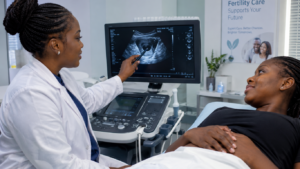


Facing a diagnosis of unexplained infertility can feel like navigating a maze without a map, especially when standard evaluations show everything is normal. Approximately 15% to 30% of couples are diagnosed with unexplained infertility in 2026 because standard tests return normal results, leaving many searching for deeper clinical insights.
We understand the frustration of having more questions than answers during your journey to parenthood. Our goal is to highlight the most effective diagnostic pathways that go beyond basic screenings to help you find clarity.
Key Takeaways
| Question | Diagnostic Insight |
|---|---|
| What is the first step for unexplained infertility? | A deep dive into understanding the causes of infertility through advanced hormone and uterine testing. |
| Can silent endometriosis be detected? | Yes, through BCL6 protein markers or diagnostic laparoscopy, even if symptoms are absent. |
| Is there a test for implantation timing? | The Endometrial Receptivity Analysis (ERA) helps identify your specific window of implantation. |
| Does sperm quality matter beyond count? | Advanced DNA fragmentation tests can reveal issues missed by standard semen analysis. |
| What role does genetics play? | Preimplantation Genetic Testing can identify chromosomal issues in embryos before transfer. |
- Advanced testing identifies hidden factors like inflammation or genetic anomalies.
- Personalized diagnostic plans increase the success rates of treatments like intrauterine insemination (IUI).
- Evaluating both partners is essential to uncovering the complete fertility picture.
Understanding the Reality of Unexplained Infertility
Unexplained infertility occurs when a couple fails to conceive after a year of regular intercourse despite normal results from standard tests. These standard tests usually include basic semen analysis, ovulation tracking, and imaging of the fallopian tubes.
In 2026, we view this diagnosis not as a dead end but as a signal that more sophisticated tools are required. We focus on identifying subtle physiological or molecular barriers that traditional methods might overlook.
By shifting our perspective toward cellular and genetic levels, we can often find the “why” behind the struggle. This proactive approach allows us to refine your treatment strategy and improve your chances of success at our clinic.
The Role of Comprehensive Ovarian Reserve Testing
Basic FSH tests only provide a snapshot of fertility, but comprehensive testing offers a more detailed view of the egg supply. We utilize Anti-Mullerian Hormone (AMH) levels and Antral Follicle Counts (AFC) to assess ovarian health accurately.
These metrics help us predict how your ovaries might respond to stimulation during IVF procedures and treatment. Understanding your reserve is crucial for tailoring medication dosages and managing expectations for egg retrieval.
If ovarian reserve is found to be significantly diminished, we can discuss alternatives early in the process. This might include options like oocyte donation to help you achieve your goal of parenthood.
Advanced Uterine Environment Assessments
The uterine lining must be perfectly prepared for an embryo to implant successfully. New technologies in 2026 allow us to test for the “window of implantation” through Endometrial Receptivity Analysis (ERA).
This test determines if the lining is receptive at the standard time or if a personalized transfer schedule is needed. Adjusting the timing can be the key to overcoming repeated implantation failures in unexplained cases.
The uterine environment is more than just a physical space; it is a complex biological system that requires precise synchronization for successful pregnancy.
We also look for markers of uterine inflammation which can prevent embryos from attaching. Specialized tests can detect these issues even when the uterus looks normal on a standard ultrasound.
Did You Know?
44% of women labeled with unexplained infertility are found to have endometriosis when undergoing advanced diagnostic laparoscopy.
Investigating Silent Endometriosis with Laparoscopy
Endometriosis does not always present with painful periods or obvious symptoms. This “silent” version can interfere with fertility by causing pelvic inflammation or affecting egg quality.
Diagnostic laparoscopy remains the gold standard for identifying and treating endometriosis directly. During this procedure, we can visualize the pelvic cavity and remove any tissue that might be hindering your fertility.
Five essential diagnostic tests for unexplained infertility presented as a clear, visual guide. Learn what each test checks and how results guide next steps.
Alternatively, non-invasive biopsies like ReceptivaDx look for specific protein markers (BCL6) associated with inflammation. If these markers are high, we can treat the underlying inflammation before proceeding with pregnancy attempts.

Sperm DNA Fragmentation and Male Fertility Factors
A normal semen analysis measures count, movement, and shape, but it does not check the health of the genetic material inside the sperm. High levels of DNA fragmentation can lead to failed fertilization or early pregnancy loss.
In 2026, we frequently recommend DNA fragmentation testing for couples with unexplained infertility. This test provides a “DNA Fragmentation Index” (DFI) that tells us if the sperm’s genetic integrity is compromised.
If high fragmentation is found, we may use techniques like Intracytoplasmic Sperm Injection (ICSI) to select the healthiest sperm. We might also suggest lifestyle changes or antioxidants to improve sperm health before the next cycle.

Preimplantation Genetic Testing (PGT) for Embryo Viability
Many cases of “unexplained” infertility are actually due to chromosomal abnormalities in the embryos. These embryos may appear normal under a microscope but fail to grow once transferred.
Through Preimplantation Genetic Testing in 2026, we can screen embryos for the correct number of chromosomes. This process, known as PGT-A, significantly reduces the risk of miscarriage and improves live birth rates.
- PGT-A: Screens for aneuploidy (incorrect chromosome number).
- PGT-M: Screens for specific monogenic or inherited diseases.
- PGT-SR: Screens for structural rearrangements in chromosomes.
By selecting only chromosomally healthy embryos, we can bypass the “unexplained” failure of past cycles. This advanced screening is one of the most powerful tools currently available in modern fertility care.
Did You Know?
14% of men in ‘unexplained’ cases have high Sperm DNA Fragmentation despite having a completely normal standard semen analysis.
Analyzing Chronic Endometritis Through Specialized Biopsy
Chronic Endometritis (CE) is a persistent inflammation of the endometrial lining usually caused by bacteria. Unlike acute infections, CE often has no symptoms but can make the uterus hostile to an embryo.
We use a specialized biopsy to look for plasma cells (CD138 markers) in the uterine lining. Identifying this condition is vital because it is highly treatable with a simple course of antibiotics.
Clearing the inflammation often leads to successful implantation in the very next cycle. We prioritize this test for anyone who has experienced multiple failed transfers without a clear reason.
The Impact of Immunological Testing on Implantation
In some unexplained cases, the body’s immune system may mistakenly attack the embryo or prevent it from implanting. This is often referred to as reproductive immunology.
We can test for Natural Killer (NK) cell activity and other immune markers that might be overactive. While this field is still evolving in 2026, many patients find success by addressing these immune imbalances.
Treatments may include specialized medications or infusions to calm the immune response during the transfer window. We carefully evaluate these options based on your specific diagnostic results and history.
Selecting a Modern Fertility Clinic for Deeper Investigation
The right clinic makes all the difference when dealing with complex or unexplained issues. You need a team that stays updated on the latest diagnostic protocols and maintains a high-tech laboratory.
We pride ourselves on being a leading fertility clinic that offers compassionate care alongside advanced science. Our specialists take the time to listen to your journey and recommend only the tests that make sense for you.
From initial consultations to complex surgical sperm retrieval (TESA/PESA), we provide a full spectrum of services. Finding answers requires a partnership between you and your medical team.
Exploring Donor Options and Alternative Paths to Parenthood
If advanced diagnostic tests reveal significant hurdles with egg or sperm quality, we may explore donor options. These paths provide a high success rate for couples who have faced long-term unexplained challenges.
We offer comprehensive programs for sperm donation and donor embryo adoption. These programs are designed to be transparent, supportive, and medically rigorous.
Choosing a donor path is a deeply personal decision, and we are here to support you through the emotional and legal aspects. Our goal is to ensure you feel confident and empowered as you expand your family.
Conclusion
Unexplained infertility is a challenging diagnosis, but the advancements of 2026 mean that many “hidden” causes can now be identified. By utilizing sophisticated tests like PGT, ERA, and DNA fragmentation analysis, we can move past the unknown and create a targeted plan for your success.
We encourage you to advocate for a deeper investigation if your standard tests have come back normal. Every piece of data we gather brings us one step closer to your goal of a healthy pregnancy. We are committed to helping you find those answers and providing the expert care you deserve on this journey.