Trying to get pregnant can be an emotional journey. But when you have polycystic ovary syndrome (PCOS), the experience sometimes comes with an extra layer of uncertainty. One month, your period arrives as expected. The next, it’s nowhere to be found. You try tracking your fertile window, but your cycle keeps changing. Before long, you’re wondering whether something is wrong and, more importantly, whether you’ll ever be able to conceive.
If this sounds familiar, you’re certainly not alone.
PCOS is one of the most common hormonal conditions affecting women of reproductive age. Although it can make pregnancy more difficult, having PCOS doesn’t automatically mean you cannot have children. Many women with the condition conceive naturally, while others need a little medical help along the way.
The important thing is understanding what’s happening in your body and finding the right treatment for your situation. If you’re exploring PCOS fertility treatment in Lagos, this guide explains how the condition affects your chances of pregnancy, the fertility treatments available, and when to consider visiting a specialist.
What Is PCOS, and Why Does It Affect Fertility?
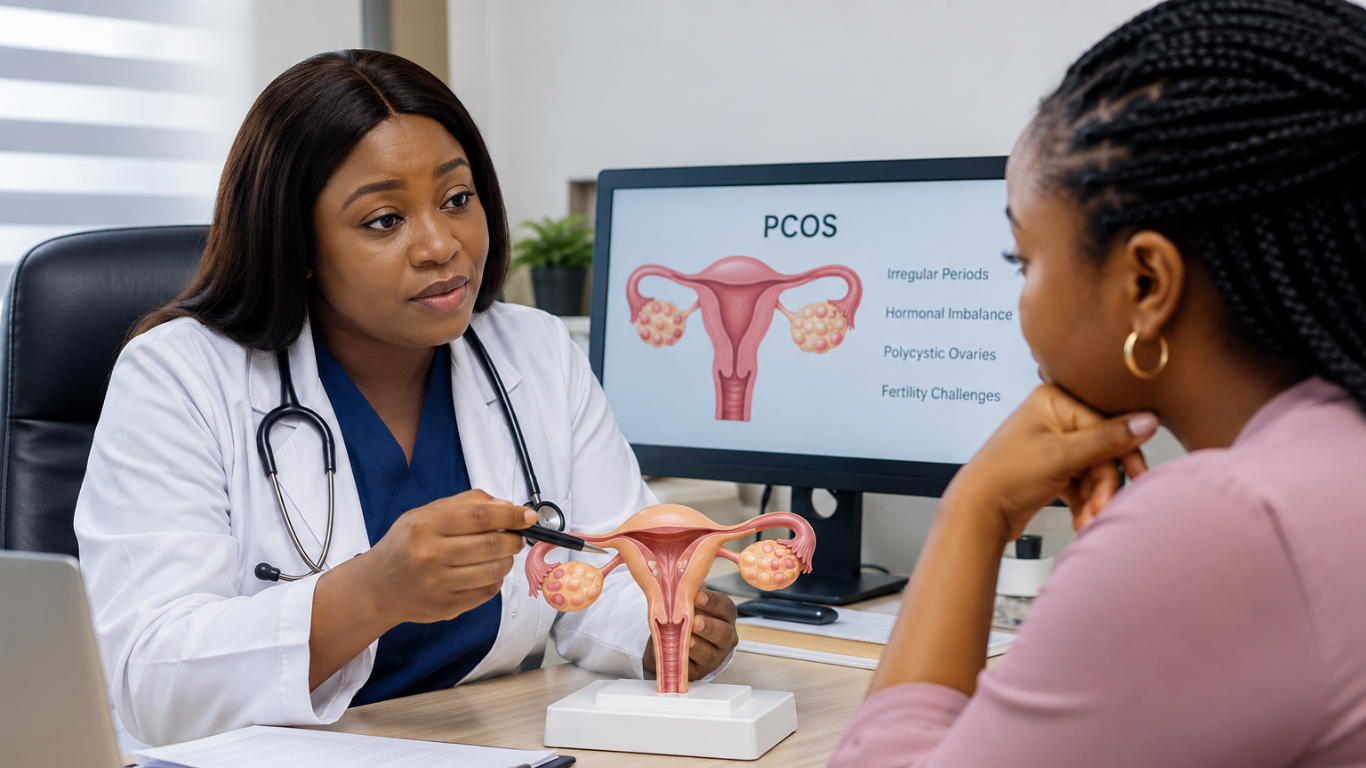
Polycystic ovary syndrome (PCOS) is a hormonal and metabolic condition that affects how the ovaries function. It is often associated with irregular menstrual cycles, elevated androgen levels, and difficulties with ovulation.
To understand why PCOS can affect fertility, it helps to know what happens during a typical menstrual cycle. Usually, an egg develops inside one of the ovaries and is released during ovulation. If sperm fertilises the egg, pregnancy may occur.
With PCOS, however, the hormonal signals responsible for egg development and release may become disrupted. Some women ovulate occasionally, while others go several months without ovulating at all. And without ovulation, natural conception cannot occur during that cycle.
Another important aspect of PCOS is insulin resistance, which affects many women with the condition. When the body doesn’t respond effectively to insulin, it may produce more of it. Elevated insulin levels can contribute to increased androgen production, further interfering with normal ovarian function.
Interestingly, not every woman with PCOS has visible polycystic ovaries on an ultrasound. Despite the name, the condition is more complex than simply having ovarian cysts.
PCOS also doesn’t affect everyone in the same way. Two women with the same diagnosis may have completely different symptoms, menstrual patterns, and fertility experiences. That’s why successful treatment begins with understanding your individual condition rather than following a general approach.
Common Signs and Symptoms of PCOS
For some women, PCOS becomes noticeable during their teenage years. Others don’t realise they have it until they begin trying to conceive. The symptoms can be subtle, particularly when irregular periods have always seemed normal. Some of the most common signs include:
- Irregular menstrual periods: Your periods may arrive unpredictably, occur several months apart, or stop altogether.
- Difficulty getting pregnant: Irregular or absent ovulation can make conception more challenging.
- Excessive facial or body hair: Higher androgen levels may cause increased hair growth around the chin, chest, abdomen, or other areas.
- Persistent acne: Hormonal changes can contribute to acne that continues beyond adolescence.
- Thinning scalp hair: Some women experience gradual hair thinning or hair loss.
- Weight changes: PCOS may be associated with weight gain or difficulty managing weight, although it also affects women who are not overweight.
- Darkened skin patches: These may appear around the neck, underarms, or groin and can sometimes be associated with insulin resistance.
You don’t need to experience every symptom to have PCOS. In fact, some women have relatively regular periods but still experience other hormonal or metabolic features of the condition. It’s also worth remembering that irregular periods don’t always mean PCOS. Thyroid disorders, elevated prolactin, and other medical conditions can produce similar symptoms. A proper diagnosis helps distinguish between these possibilities.
Can You Get Pregnant Naturally With PCOS?
Yes, getting pregnant naturally with PCOS is possible. Many women with the condition conceive without assisted reproductive treatment, particularly when they still ovulate.
However, the likelihood of natural conception depends on several factors. For example, a woman who ovulates every month may have a different experience from someone who only ovulates a few times a year. Even when ovulation occurs, predicting the fertile window can be difficult because menstrual cycles may be irregular.
Age also matters. Like other women, those with PCOS experience age-related changes in fertility, including a gradual decline in egg quality and reproductive potential.
Other factors, such as sperm quality, fallopian tube health, and underlying reproductive conditions, can influence the chances of pregnancy. This is why PCOS shouldn’t automatically be blamed for every difficulty with conception. Sometimes, irregular ovulation is the main issue. In other cases, there may be additional fertility challenges that need attention. The encouraging part is that several treatments can help women with PCOS ovulate and improve their opportunities for conception.
How Is PCOS Diagnosed at a Fertility Clinic in Lagos?
Before starting treatment, your fertility specialist needs to establish whether you have PCOS and understand how it may be affecting your reproductive health. There isn’t one test that can diagnose PCOS in every patient.
In adults, diagnosis typically involves identifying at least two of three features: irregular ovulation, evidence of elevated androgen levels, and polycystic ovarian morphology on ultrasound or an appropriately interpreted anti-Müllerian hormone (AMH) test. Other possible causes must first be excluded.
Your assessment may involve several investigations.
Medical History and Menstrual Cycle Assessment
Your doctor will usually begin by asking questions about your menstrual cycle, symptoms, medical history, and pregnancy plans. You may be asked how often your periods occur, whether you’ve noticed changes in your weight or skin, and how long you’ve been trying to conceive. These conversations are important because menstrual patterns often provide useful clues about ovulation.
For instance, if your periods occur only a few times each year, there’s a possibility that you’re not ovulating regularly.
Hormonal Blood Tests
Hormonal testing can help your doctor investigate possible causes of irregular menstrual cycles and assess certain features associated with PCOS. Depending on your symptoms, tests may include androgen levels, thyroid function, prolactin, and other relevant hormones.
Not every patient requires the same investigations.
Pelvic Ultrasound
A pelvic ultrasound allows your doctor to examine your ovaries and other reproductive organs. Some women with PCOS have an increased number of small follicles within their ovaries. However, this appearance alone doesn’t confirm PCOS. Ultrasound may also help identify other conditions that could influence your fertility.
Blood Sugar and Metabolic Tests
Because PCOS is associated with insulin resistance and an increased risk of type 2 diabetes, metabolic health is an important part of the assessment. Your doctor may recommend blood glucose testing, blood pressure checks, and other investigations. For women with PCOS planning pregnancy, an oral glucose tolerance test may be recommended to assess blood sugar regulation.
Additional Fertility Tests
If you’ve been trying to conceive, your specialist may recommend investigating other possible causes of infertility. These investigations can include semen analysis for your partner and, when appropriate, tests to assess whether your fallopian tubes are open. A complete fertility assessment helps prevent situations where treatment focuses entirely on PCOS while another fertility problem goes unnoticed.
PCOS Fertility Treatment Options in Lagos
One of the most important things to understand about PCOS fertility treatment is that there isn’t a single solution for everyone. The right treatment depends on whether you’re ovulating, your age, your overall reproductive health, and whether additional fertility problems have been identified. Some women respond well to medication that stimulates ovulation. Others may benefit from assisted reproductive procedures.
Here are the main treatment approaches your specialist may discuss.
1. Lifestyle Changes and Metabolic Health Management
Lifestyle management is an important part of PCOS care, even when fertility medication is necessary. Regular physical activity, balanced nutrition, adequate sleep, and management of metabolic conditions can support reproductive and overall health.
For women who are overweight, modest weight reduction may improve menstrual regularity and ovulation. However, PCOS also affects women with a lower body weight, and weight loss isn’t a universal treatment recommendation. You don’t need to adopt an extreme diet or follow every PCOS meal plan circulating on social media. A sustainable approach is usually more helpful.
Eating balanced meals, staying physically active, and addressing underlying metabolic concerns can support your health while you prepare for pregnancy. However, lifestyle changes should not replace fertility investigations when you’ve been struggling to conceive.
2. Ovulation Induction Medication
For women whose main fertility challenge is irregular or absent ovulation, ovulation induction is often one of the first treatments considered.
Ovulation induction involves using medication to stimulate the ovaries to develop and release an egg.
Letrozole is generally recommended as the first-line medication for women with PCOS-related anovulatory infertility when no other infertility factors are present. It works by temporarily affecting oestrogen production, encouraging hormonal signals that support follicle development. Other medications, including clomiphene citrate and injectable gonadotrophins, may be considered depending on your response and medical history.
Your fertility specialist may recommend ultrasound monitoring to assess how your ovaries respond. This monitoring is important because fertility medications can sometimes cause multiple follicles to develop, increasing the possibility of multiple pregnancy. Although ovulation induction can be effective, releasing an egg doesn’t guarantee pregnancy during that cycle. Sometimes, treatment needs to be adjusted based on how your body responds.
3. Metformin for Women With PCOS
Metformin is a medication commonly used to manage blood glucose levels and insulin resistance. For certain women with PCOS, it may help improve metabolic health and support menstrual regularity. It can also improve ovulation in some cases.
However, metformin isn’t automatically the best fertility medication for every woman with PCOS. When the main problem is absent ovulation, letrozole is generally preferred for inducing ovulation in eligible patients. Metformin may be recommended when metabolic concerns are present or as part of a broader treatment plan. Your doctor will determine whether it is appropriate based on your medical history and test results.
4. Intrauterine Insemination (IUI)
Intrauterine insemination, or IUI, is an assisted reproductive procedure in which specially prepared sperm is placed directly into the uterus around the time of ovulation. The aim is to bring sperm closer to the egg and improve the opportunity for fertilisation. For women with PCOS, IUI may be considered in selected circumstances, particularly when ovulation can be stimulated or accurately timed.
However, it isn’t necessary for everyone with PCOS. Before recommending IUI, your fertility specialist will usually consider factors such as sperm quality, fallopian tube health, age, and previous treatment outcomes. Some women may benefit from ovulation induction with appropriately timed intercourse instead.
5. In Vitro Fertilisation (IVF) for PCOS
IVF is another treatment option for women experiencing PCOS-related infertility, particularly when simpler approaches haven’t worked or other fertility conditions are present. During IVF, medication stimulates the ovaries to develop eggs. The eggs are collected and fertilised with sperm in a laboratory.
A resulting embryo may then be transferred into the uterus, either during the same treatment cycle or after freezing and storage. Women with PCOS can respond strongly to ovarian stimulation medications because they may have a higher number of developing follicles.
This means careful monitoring is especially important. One potential complication is ovarian hyperstimulation syndrome (OHSS), which occurs when the ovaries respond excessively to stimulation. Modern IVF protocols can help reduce this risk through individualised medication doses, appropriate monitoring, and other preventive strategies.
IVF isn’t the first treatment every woman with PCOS needs. It may become appropriate when ovulation induction hasn’t resulted in pregnancy, fallopian tube problems are present, significant male-factor infertility has been identified, or other reproductive circumstances make assisted conception more suitable.
At The Life Fertility Clinic in Lagos, IVF is among the assisted reproductive services available to patients seeking fertility care.
6. Laparoscopic Ovarian Surgery
In certain circumstances, laparoscopic ovarian surgery may be considered for women who haven’t responded to medication-based ovulation induction. One procedure, sometimes called ovarian drilling, involves making small, controlled interventions on the ovarian surface to influence hormonal activity.
However, surgery isn’t routinely recommended as the first treatment for PCOS-related infertility. It carries potential risks, including damage to ovarian tissue and other surgical complications.
Your specialist will explain whether it is appropriate and how its potential benefits compare with other available treatments.
Which PCOS Fertility Treatment Is Best for You?
Choosing the right treatment isn’t always as straightforward as picking between medication and IVF. Your specialist needs to consider the complete picture. If your fallopian tubes are open, your partner’s sperm parameters are suitable, and irregular ovulation is the main concern, ovulation induction may be a reasonable starting point. But if you have PCOS alongside blocked fallopian tubes, medication that stimulates ovulation may not resolve the problem.
Similarly, if you’ve already completed several monitored treatment cycles without success, your specialist may recommend reviewing the diagnosis or discussing other treatment options. The goal is not simply to use the most advanced fertility treatment available. It’s to choose an approach that makes sense for your reproductive health, treatment history, and personal circumstances.
How Long Does It Take to Get Pregnant With PCOS Treatment?
This is one of the questions women ask most frequently, and understandably so. When you’ve already spent months waiting for a positive pregnancy test, the thought of another uncertain timeline can be frustrating.
Unfortunately, there isn’t a fixed period within which every woman with PCOS will conceive. Some women become pregnant after their first few monitored ovulation induction cycles. Others require additional treatment or a different approach. Your chances depend on several factors, including your age, ovarian response, sperm quality, fallopian tube health, and any other reproductive conditions.
It’s also important to understand that successful ovulation and successful pregnancy aren’t the same thing. You may respond well to medication and release an egg without becoming pregnant immediately. This doesn’t automatically mean treatment has failed.
Your fertility specialist can review your response over time and determine whether continuing, adjusting, or changing treatment is appropriate.
How Can You Improve Your Chances of Getting Pregnant With PCOS?
Although you cannot control every aspect of fertility, there are practical steps that can support your reproductive health.
Pay attention to your menstrual cycle. Tracking your periods can help you identify patterns and provide useful information during your fertility consultation. However, conventional ovulation calendars may be unreliable when your cycles are irregular.
Get appropriate fertility investigations. Knowing whether you’re ovulating and whether other fertility factors are present can help guide treatment.
Take care of your metabolic health. Managing blood sugar, blood pressure, and other health concerns is important before and during pregnancy.
Discuss preconception supplements. Your healthcare professional can advise you about folic acid and any additional supplements appropriate for your circumstances.
Avoid self-medicating with fertility drugs. Medications that stimulate ovulation require appropriate medical supervision. Taking them without monitoring can increase the risk of complications.
Be cautious with unverified fertility remedies. Not every herbal mixture, supplement, or online PCOS treatment has reliable evidence supporting its safety or effectiveness.
And perhaps most importantly, don’t allow the search for a perfect lifestyle routine to delay necessary medical care. You can work on improving your overall health while receiving fertility treatment.
When Should You See a PCOS Fertility Specialist in Lagos?
If you have PCOS and your menstrual cycles are irregular or absent, you don’t necessarily need to wait a full year before seeking fertility advice. Because irregular ovulation is already a recognised potential cause of infertility, earlier assessment may be appropriate.
You should consider visiting a fertility specialist if:
- You’ve been diagnosed with PCOS and are finding it difficult to conceive.
- Your periods occur very infrequently or have stopped.
- You’ve been trying to get pregnant without knowing whether you’re ovulating.
- You’ve used fertility medication without success.
- You have a history of unsuccessful fertility treatment.
- You’re 35 or older and concerned about delaying pregnancy.
For women without known fertility problems, evaluation is generally recommended after 12 months of unsuccessful attempts to conceive when under 35, or after six months when aged 35 or older. However, known ovulation problems may justify earlier assessment. Seeking help doesn’t automatically mean you’ll need IVF or another advanced fertility procedure. Sometimes, the first appointment simply provides the clarity you’ve been missing.
Choosing a PCOS Fertility Clinic in Lagos
Finding a fertility clinic is an important decision, especially when you’ve been dealing with uncertainty around your reproductive health. Beyond location and convenience, consider whether the clinic offers appropriate fertility investigations, access to qualified specialists, individualised treatment planning, and clear communication.
A good fertility consultation should help you understand why certain investigations are necessary, what treatment options may be suitable, and what risks or limitations are involved. It’s also reasonable to ask questions.
For example, how will your response to ovulation medication be monitored? What happens if the first treatment doesn’t work? At what point might another approach be recommended? You deserve answers that are clear, realistic, and specific to your circumstances.
For women seeking PCOS treatment in Lagos, choosing a clinic with access to appropriate fertility evaluation and assisted reproductive services can make it easier to explore different treatment options when necessary.
PCOS Fertility Care at The Life Fertility Clinic in Lagos
If you’ve been searching for a fertility clinic in Lagos because of PCOS-related pregnancy challenges, The Life Fertility Clinic offers fertility assessment and assisted reproductive services. Located in Dopemu, Agege, Lagos, the clinic provides fertility care, including IVF, IUI, and other assisted conception services.
For women with PCOS, understanding the underlying cause of difficulty conceiving is an important starting point. Some patients may need treatment to support ovulation. Others may require further investigations or assisted reproductive procedures. The appropriate next step depends on your diagnosis, medical history, and reproductive goals.
A fertility consultation provides an opportunity to discuss your symptoms, review previous investigations, and understand which treatment options may be appropriate. Whether you’ve only recently discovered you have PCOS or you’ve been trying to conceive for some time, getting professional guidance can help you move forward with better information.
Frequently Asked Questions About PCOS Fertility Treatment in Lagos
Can PCOS cause permanent infertility?
PCOS can cause ongoing difficulties with ovulation, but it doesn’t necessarily lead to permanent infertility. Many women with PCOS conceive naturally or with fertility treatment. The outcome depends on individual reproductive factors, including age and the presence of other fertility conditions.
Where can I get PCOS fertility treatment in Lagos?
You can seek fertility assessment from qualified reproductive healthcare professionals in Lagos. The Life Fertility Clinic, located in Dopemu, Agege, provides fertility evaluation and assisted reproductive services, including IVF and IUI.
Can PCOS be cured completely?
There is currently no permanent cure for PCOS. However, symptoms, metabolic concerns, and fertility difficulties can often be managed through appropriate medical care, lifestyle measures, and reproductive treatment when necessary.
How do I know if I’m ovulating with PCOS?
Ovulation may be assessed through menstrual history, appropriately timed progesterone testing, or ultrasound monitoring. Home ovulation predictor kits may be less reliable for some women with PCOS because of hormonal changes.
Can metformin help me conceive with PCOS?
Metformin may improve metabolic health and support ovulation in some women with PCOS. However, it isn’t the preferred first-line ovulation induction medication for everyone. Its suitability depends on your medical circumstances.
Can a woman with PCOS get pregnant after 35?
Yes. Women with PCOS can become pregnant after 35, either naturally or with fertility assistance. However, age-related fertility changes still apply, making timely evaluation particularly important.
Does PCOS affect egg quality?
PCOS can influence ovarian function and follicle development, but it doesn’t automatically mean your eggs are of poor quality. Age, metabolic health, and other reproductive factors can affect egg quality and pregnancy outcomes.
How much does PCOS fertility treatment cost in Lagos?
The cost of PCOS fertility treatment in Lagos varies according to the investigations required, prescribed medication, monitoring, and whether assisted reproductive procedures are recommended. A fertility consultation can help clarify the treatment options and associated costs.
Can I get pregnant with PCOS without IVF?
Yes. Many women with PCOS conceive without IVF. Depending on your ovulation pattern and overall fertility health, natural conception or medication-based ovulation induction may be possible.
What is the best fertility medication for PCOS?
Letrozole is generally recommended as the first-line medication for women with PCOS-related infertility caused by irregular or absent ovulation, provided no other infertility factors are present. Your specialist will determine whether it’s suitable for you.
Take the Next Step Towards Understanding Your Fertility
Living with PCOS can sometimes make pregnancy feel unpredictable. You may spend months trying to understand your cycle, wondering whether you’re ovulating, or questioning why conception hasn’t happened despite your efforts. But having PCOS doesn’t mean your dream of becoming a parent is out of reach.
For some women, improving ovulation may be enough. Others may need additional fertility treatment or a more detailed assessment to identify other contributing factors. What matters is finding out what your body needs rather than relying on assumptions.
If you’re considering PCOS fertility treatment in Lagos, The Life Fertility Clinic can help you explore available fertility services and discuss the next steps based on your reproductive health.
Book a fertility consultation with The Life Fertility Clinic today.
Location: 34, Oyinlola Street, by Adeolu Bus Stop, Lagos-Abeokuta Expressway, Dopemu, Agege, Lagos, Nigeria.
Website: https://thelifefertility.com/
Medical note: This article is for educational purposes and does not replace individual medical advice. PCOS treatment should be guided by a qualified healthcare professional, and no fertility treatment can guarantee pregnancy.