

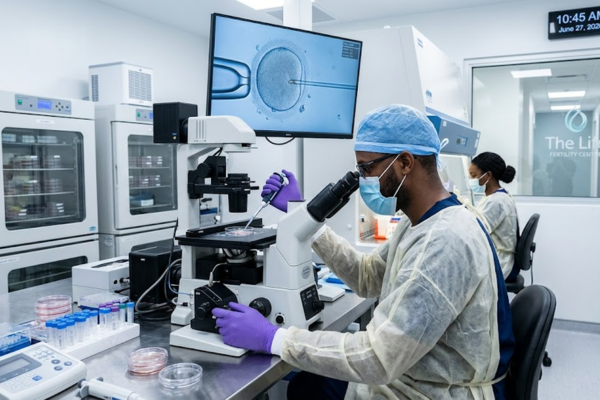
The journey to parenthood is a path filled with hope, compassion, and the potential for a joyful outcome. We understand that starting this process in 2026 can feel overwhelming, but we are here to support you as you explore this incredible option. Did you know that the cumulative success rate after three complete IVF cycles reaches between 70% and 90% for patients, depending on age and medical profile? This understanding helps set realistic expectations as you begin your unique journey toward holding your little one in your arms.
Key Takeaways
| Question | Guidance for New Patients |
|---|---|
| What is the first step in the IVF process? | Your journey begins with a thorough consultation and comprehensive fertility testing to understand your unique needs. |
| How long does a single IVF cycle take? | A typical cycle spans approximately four to six weeks from the start of stimulation to the embryo transfer. |
| What is the difference between IVF and ICSI? | Standard IVF mixes sperm and eggs in a dish, while ICSI involves injecting a single sperm directly into the egg. |
| Is genetic testing available for embryos? | Yes, we use preimplantation genetic testing (PGT) to screen embryos for chromosomal health before transfer. |
| What happens if we have extra embryos? | Couples can choose cryopreservation for future use, ensuring their genetic material is safely stored for years. |
| Are there options if we cannot use our own eggs? | Our oocyte donation program provides a beautiful path to parenthood for those needing donor eggs. |
Understanding the Foundation: Your First Fertility Consultation
The first step in any successful treatment is a deep understanding of your medical history and family goals. We believe in a patient-centered approach that treats you as an individual rather than just a medical case.
During your initial visit, you will meet with a specialist to discuss your history and any previous attempts at conception. This conversation is the cornerstone of building a relationship based on trust and professional expertise.
We’ll explore the process step by step, shedding light on each step to help you make informed decisions. Choosing the right fertility clinic and specialist is vital for your comfort and long-term success.
Our team provides a warm and supportive environment where your questions are always welcomed and answered clearly. We aim to bring smiles and completeness to families through every interaction we have.
Diagnostic Testing and Fertility Evaluation
Before treatment begins, we conduct detailed diagnostic tests to identify any underlying challenges. These tests often include hormone assessments, ultrasound scans, and semen analysis to provide a full picture of your health.
For the male partner, we may recommend specific evaluations to ensure sperm quality is optimal for the upcoming cycle. In some cases, advanced male fertility assessments can provide critical data for the embryology team.
If natural ejaculation is not an option, specialized techniques like TESA or PESA sperm retrieval can be utilized. These procedures allow us to collect sperm directly from the reproductive tract for use in the laboratory.
We combine the best of science and technology to ensure your diagnosis is as accurate as possible. This stage is about gathering the information needed to create a roadmap for your success in 2026.
Personalized Treatment Planning for Your IVF Cycle
Once your results are ready, our specialists develop a personalized treatment plan tailored specifically to your body. No two families are the same, and your protocol should reflect your specific biological needs.
We consider factors such as age, ovarian reserve, and previous treatment history when designing your schedule. This meticulous planning is what sets our fertility clinic apart in delivering high-quality care.
Your plan will outline the medications you need and the timeline for each phase of the cycle. We prioritize clear communication so you always know what to expect in the coming weeks.
Our dedicated team is committed to making your journey seamless and stress-free. We are partners in your process, working diligently to meet the expectations of every client we serve.
Did You Know?
Frozen Embryo Transfers (FET) now account for over 72% of all IVF transfers in leading clinics, largely due to improved cryopreservation techniques.
Ovarian Stimulation: Preparing Your Body for Success
The stimulation phase involves taking medications to encourage the ovaries to produce multiple healthy eggs. Typically, the body only releases one egg per month, but IVF requires more to increase the chances of a successful pregnancy.
During this ten to twelve-day period, you will visit our specialized fertility clinic for regular monitoring. We use ultrasound and blood tests to track the growth of your follicles and adjust medication dosages as needed.
It is common to feel a bit bloated or tired during this stage as your hormones shift. We provide constant support and guidance to ensure you feel comfortable throughout this vital part of the process.
When the follicles reach the ideal size, a trigger injection is administered to finalize egg maturation. This injection is precisely timed to occur 36 hours before the egg retrieval procedure.
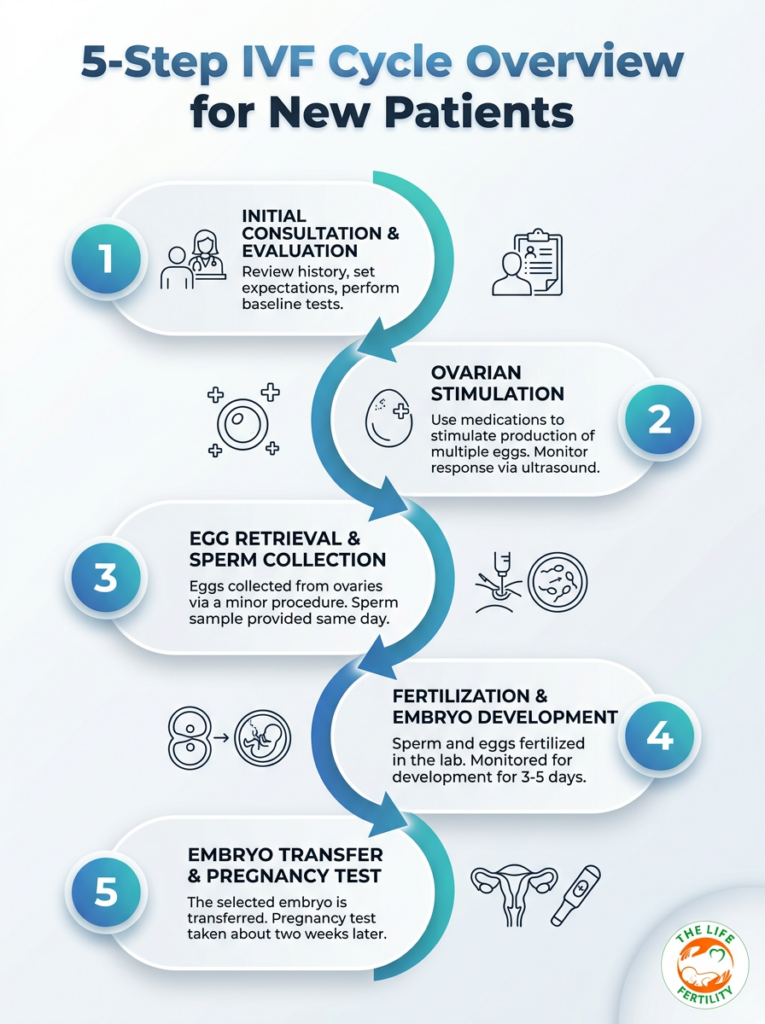
A clear 5-step overview of the IVF cycle designed for first-time patients. This infographic guides you through what to expect at each stage.
The Egg Retrieval Procedure: What to Expect
Egg retrieval is a minor surgical procedure performed under light sedation to ensure your complete comfort. A thin needle is guided by ultrasound to gently collect the mature eggs from the follicles.
The entire process usually takes about twenty to thirty minutes to complete. You will rest in our recovery area for a short time afterward until the effects of the sedation wear off.
Most patients can return home the same day and resume normal activities within twenty-four hours. We take pride in everything we do to ensure your safety and comfort during this clinical milestone.
Immediately after retrieval, our embryologists identify and count the eggs in the laboratory. This moment marks the transition from the clinical phase to the laboratory phase of your IVF treatment.
Advanced Fertilization: The Role of ICSI and Traditional IVF
Once the eggs are retrieved, they are prepared for fertilization with the partner’s or donor’s sperm. In standard IVF, the sperm and eggs are placed together in a dish to fertilize naturally.
For many patients in 2026, Intracytoplasmic Sperm Injection (ICSI) is the preferred method to overcome male infertility challenges. This involves the direct injection of a single, healthy sperm into each mature egg.
Our skilled embryologists use high-powered microscopes to select the best sperm for this precise technique. ICSI significantly increases the likelihood of successful fertilization in cases of low sperm count or poor motility.
By combining the best of science and leading international standards, we maximize the potential for healthy embryos. We keep you updated on the fertilization results the morning after the procedure.
Embryo Development and the Nurturing Environment of the Lab
After fertilization, the resulting embryos are carefully nurtured in a controlled laboratory environment. Our incubators mimic the conditions of the human body to support healthy growth and cell division.
We monitor the embryos over the next three to five days as they progress toward the blastocyst stage. This period of development is critical for determining which embryos have the highest potential for implantation.
Our team adheres to the highest ethical practices and clinical excellence during this delicate phase. We believe that providing a stable, high-quality environment is essential for achieving the best possible outcomes.
You will receive regular updates on how your embryos are progressing through our assisted reproductive technology services. This transparency helps manage the emotional complexities of the wait.
Genetic Health: Preimplantation Genetic Testing (PGT) Explained
In 2026, many families choose to screen their embryos for chromosomal health before the transfer. This sophisticated technique is known as Preimplantation Genetic Testing (PGT) and is performed on a few cells from the embryo.
PGT helps us identify embryos with the correct number of chromosomes, which can reduce the risk of miscarriage. It is particularly helpful for older patients or those with a history of recurrent pregnancy loss.
By selecting the most viable embryos, we can improve the chances of a healthy live birth. This reproductive health screening is a powerful tool in modern fertility care.
We’ll explore this option with you in detail to decide if it aligns with your family goals and medical needs. Our goal is to provide you with the most comprehensive information to make the best decisions for your future.
Did You Know?
91% of patients rank ‘accuracy of embryo transfer and safe storage’ as more important than success rates or cost when selecting a clinic.
The Moment of Hope: The Embryo Transfer Process
For many people, the embryo transfer feels like the moment where hope and science finally meet. It is a simple, painless procedure where the selected embryo is placed into the uterus using a thin catheter.
The transfer is typically performed under ultrasound guidance to ensure the embryo is placed in the ideal location for implantation. You are awake for the procedure and can often view the process on a screen.
After the transfer, we recommend a short period of rest before you return to your normal daily activities. We are here to support you through the “two-week wait” until your pregnancy test.
As a leading fertility clinic, we strive to make this moment as peaceful and positive as possible. Your journey toward parenthood is our priority, and we share in your hope for a successful result.
“The Life Fertility Centre was established to bring smiles and completeness to families, providing a specialized environment where science meets compassion.”
Expanding Options: Egg Donation and Embryo Adoption
Sometimes the path to parenthood requires alternative routes, such as using donor eggs or embryos. Our oocyte donation program is designed to help those who cannot use their own eggs.
Additionally, embryo adoption is a beautiful way to build a family, offering a unique path for many couples. This process involves using embryos donated by other families who have completed their own journey.
We guide you through the matching process and legal considerations with the utmost care and professionalism. These options provide hope to individuals who might otherwise face significant biological barriers.
No matter which path you choose, our The Life Fertility team remains your dedicated companion. We provide the expertise and emotional support needed to navigate these complex but rewarding choices.
Conclusion
Navigating the world of IVF in 2026 is a journey of both science and deep emotion. We are committed to providing top-tier fertility services that combine clinical excellence with a heartfelt, patient-centered approach. From your first consultation to the moment of embryo transfer, our goal is to ensure your experience is seamless and successful. We invite you to contact us today to begin your journey toward building the family you have always dreamed of. Your story of completeness starts here, and we are honored to be a part of it.